Short answer: choose a self-propelled wheelchair when the user can and wants to push independently; choose a transit wheelchair when an attendant will normally push. The better option must also fit the user, the environment and the person lifting or assisting.
Evidence status: research reviewed, not hands-on product testing. Clinical context was checked against current NHS wheelchair-service information. Last reviewed: 20 July 2026.
The basic difference
Self-propelled
Large rear push-rims allow the user to propel the chair with their arms. An attendant can usually push using rear handles, although braking equipment varies.
Transit
Smaller rear wheels mean the chair is normally pushed by another person. Many models include attendant-operated brake levers, but the precise function must be checked in the manual.
Choose self-propelled when…
- The user has enough arm function, coordination and endurance to push safely.
- Independent movement around the home or community is an important goal.
- The environment provides enough turning and hand-clearance space for the larger rear wheels.
- The user can reach and operate the wheel locks as intended.
A self-propelled chair may be heavier or wider than a comparable transit version. Propelling technique, shoulder strain, slopes and uneven surfaces also matter. The Gloucestershire NHS wheelchair service describes self-propelling manual wheelchairs as appropriate when a person is able to move themselves using their arms.
Choose transit when…
- A family member, carer or attendant will normally provide propulsion.
- A compact folded package and straightforward car transport are higher priorities than independent pushing.
- The user cannot safely or comfortably propel a manual chair.
- The attendant understands the brakes, tipping points, kerbs and safe handling limits.
A transit chair creates greater reliance on another person. The attendant’s height, strength, walking ability and confidence are part of the decision—not an afterthought.
Five questions that decide it
- Who will propel the chair most of the time? Base the answer on normal daily use, not the best-case scenario.
- Where will it be used? Check corridors, doors, thresholds, pavements, slopes and turning space.
- How will it be transported? Measure the boot opening and storage area, then compare folded dimensions and heaviest lifting weight.
- Does it fit? Seat width, usable depth, foot support, back height and cushion needs affect posture and comfort.
- Is an assessment needed? Repeated or long-term use, pain, asymmetry, pressure risk, difficult transfers or changing needs justify professional input.
Do not choose from weight alone
“Lightweight” is not a complete specification. A very light chair can still be unsuitable if the seat is wrong, the user cannot reach the controls, the frame is difficult to lift or replacement parts are hard to obtain. Compare total weight, removable components and the heaviest section that must actually be lifted.
When to seek professional assessment
NHS wheelchair services assess mobility together with posture, movement, comfort, daily activities, the places where a chair will be used and the person’s ability to use equipment safely. Seek individual advice for pressure-care needs, significant postural support, complex transfers, progressive conditions, pain, skin concerns or uncertainty about safe propulsion.
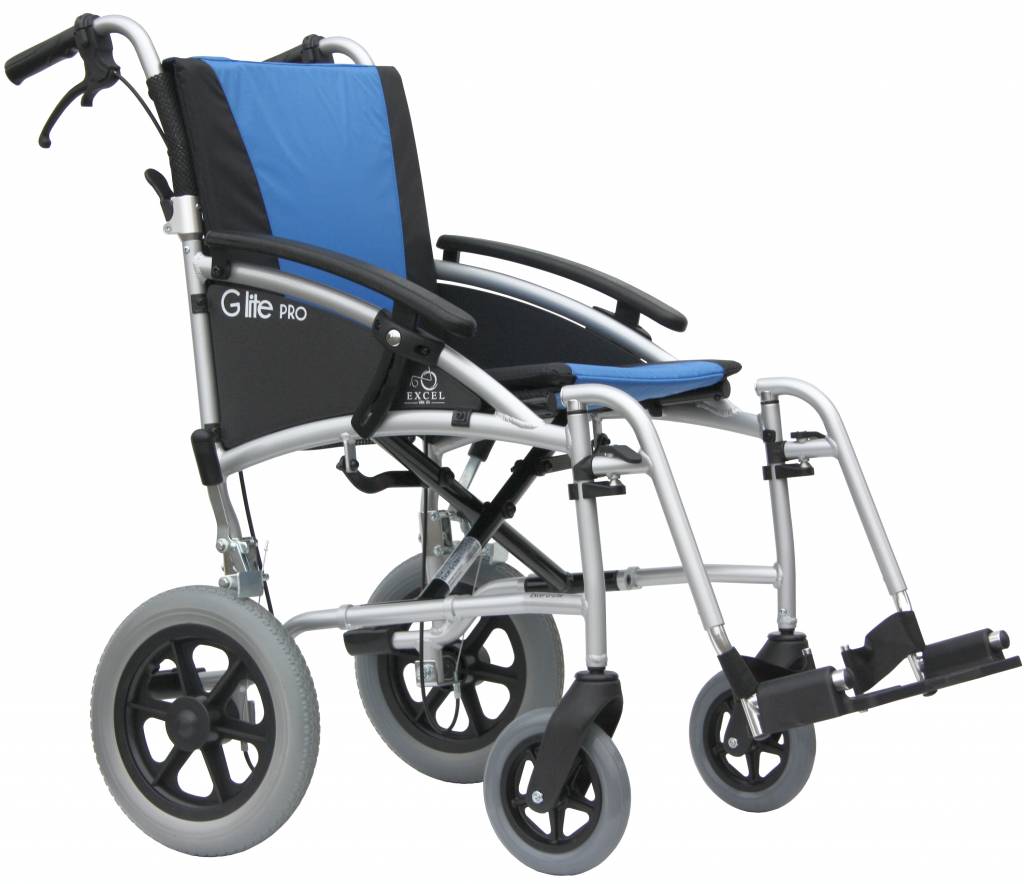
 All our Wheelchairs are FOLDABLE to make it easier to put them into a car or to carry them, and many have Puncture proof tyres, although some people prefer pneumatic tyres abut we also have models with them too.